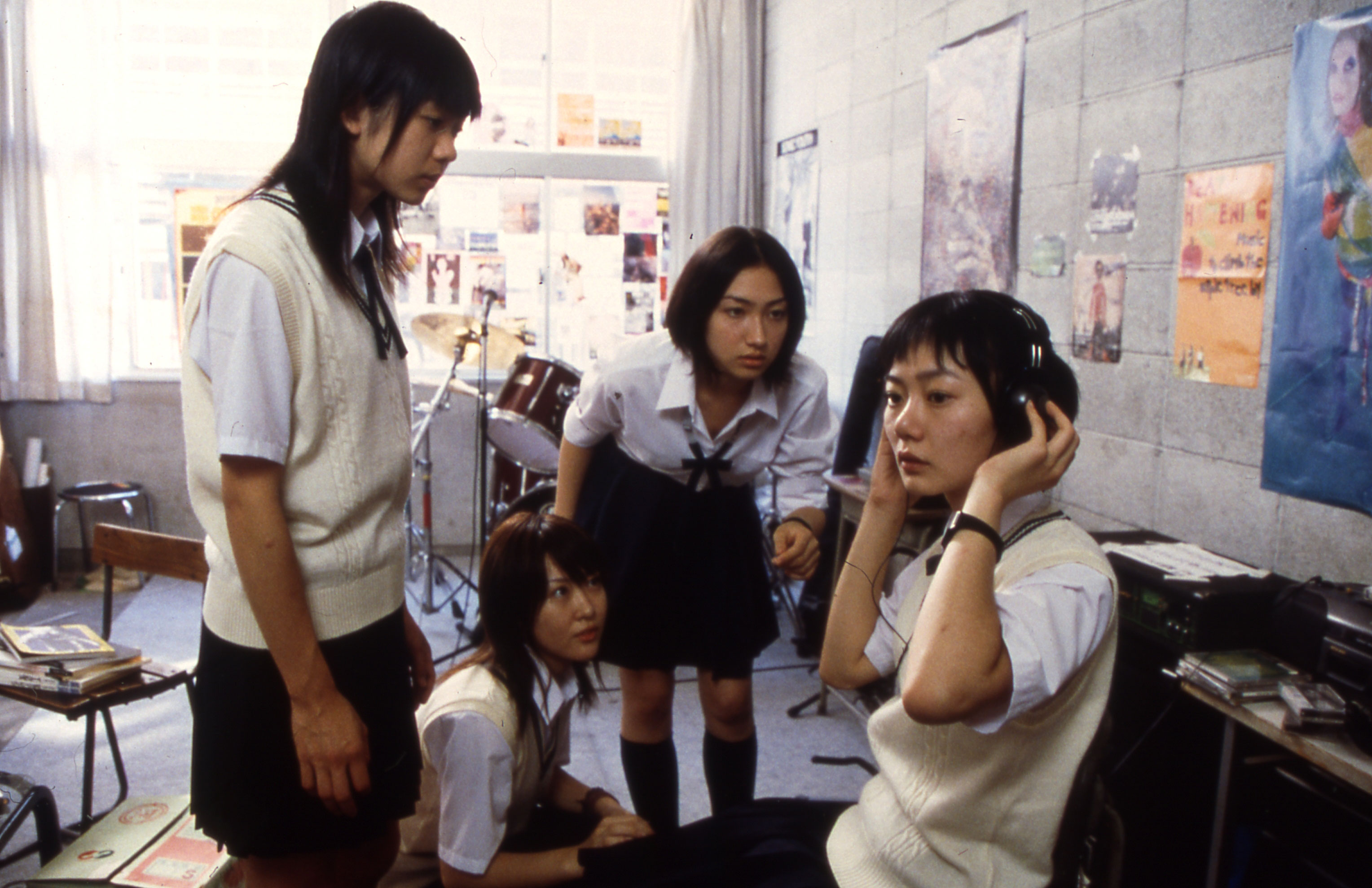

Linda Linda Linda
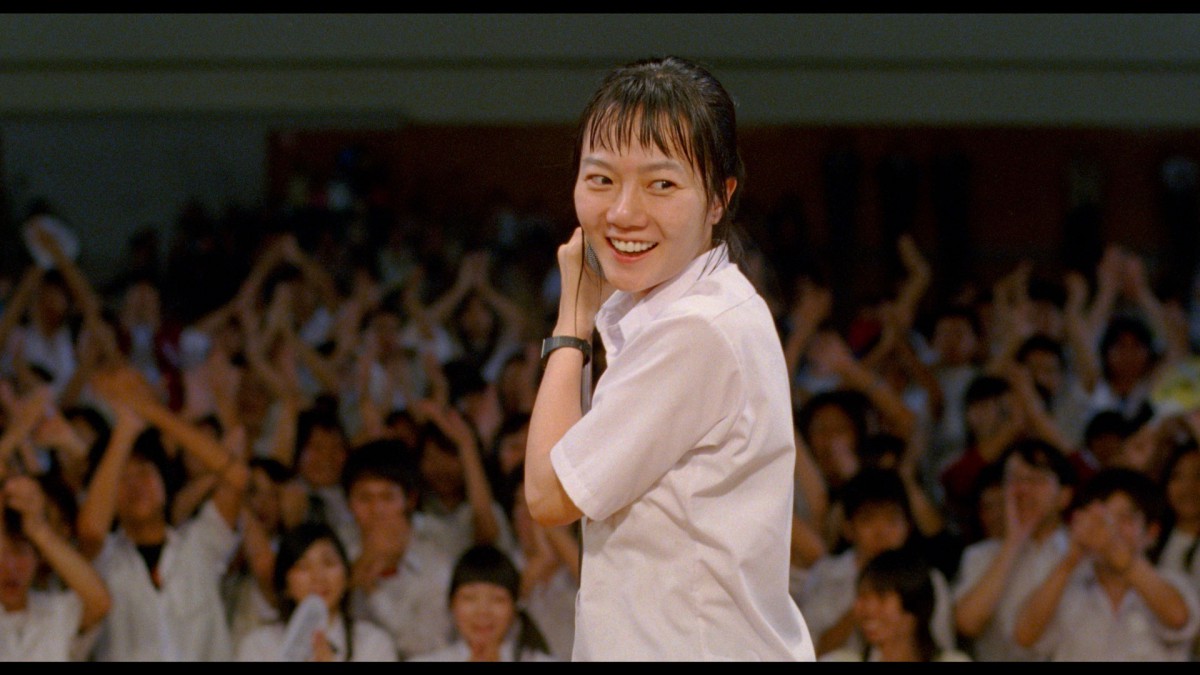
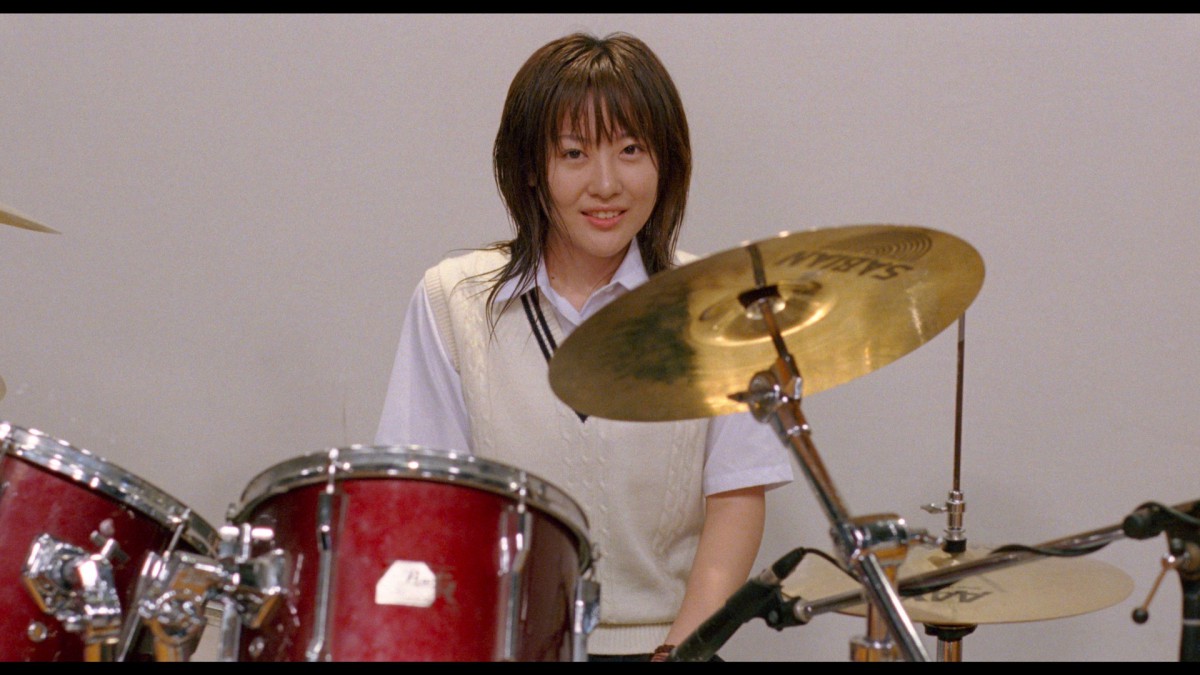
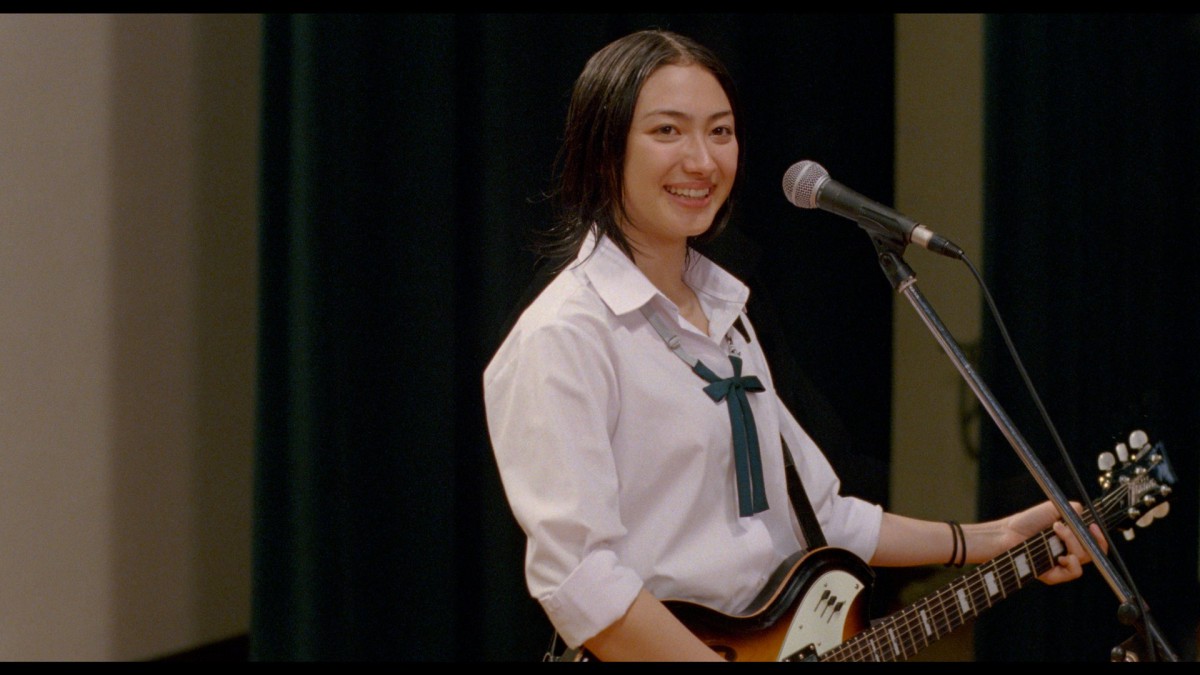
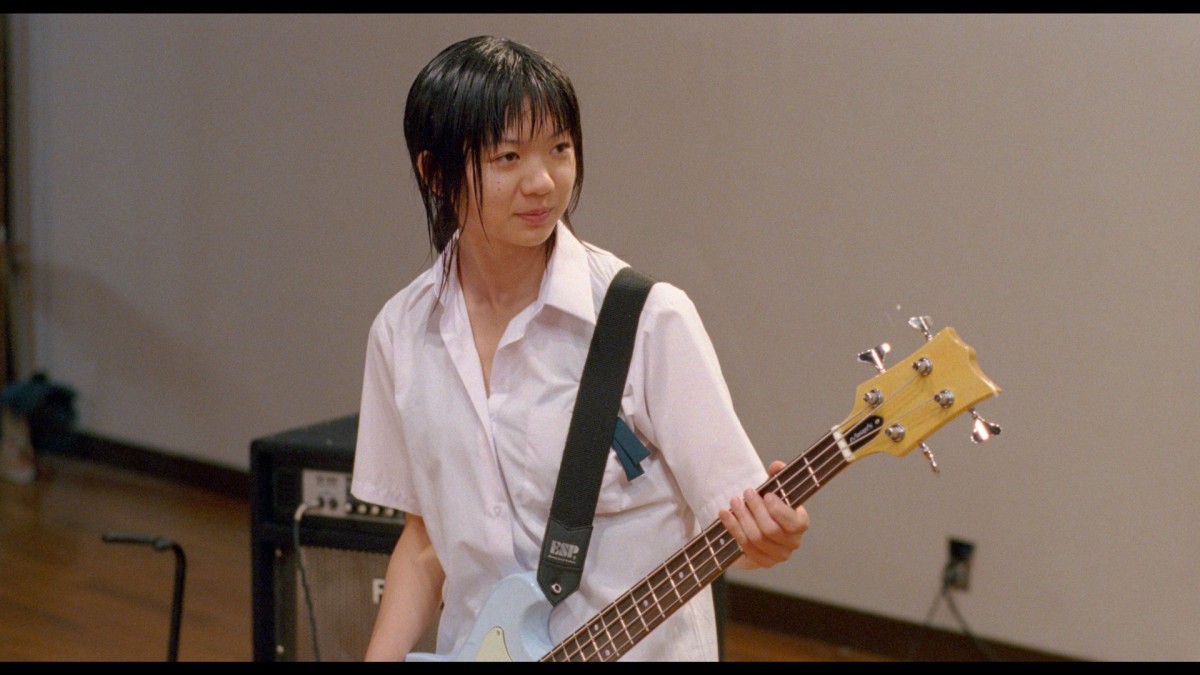
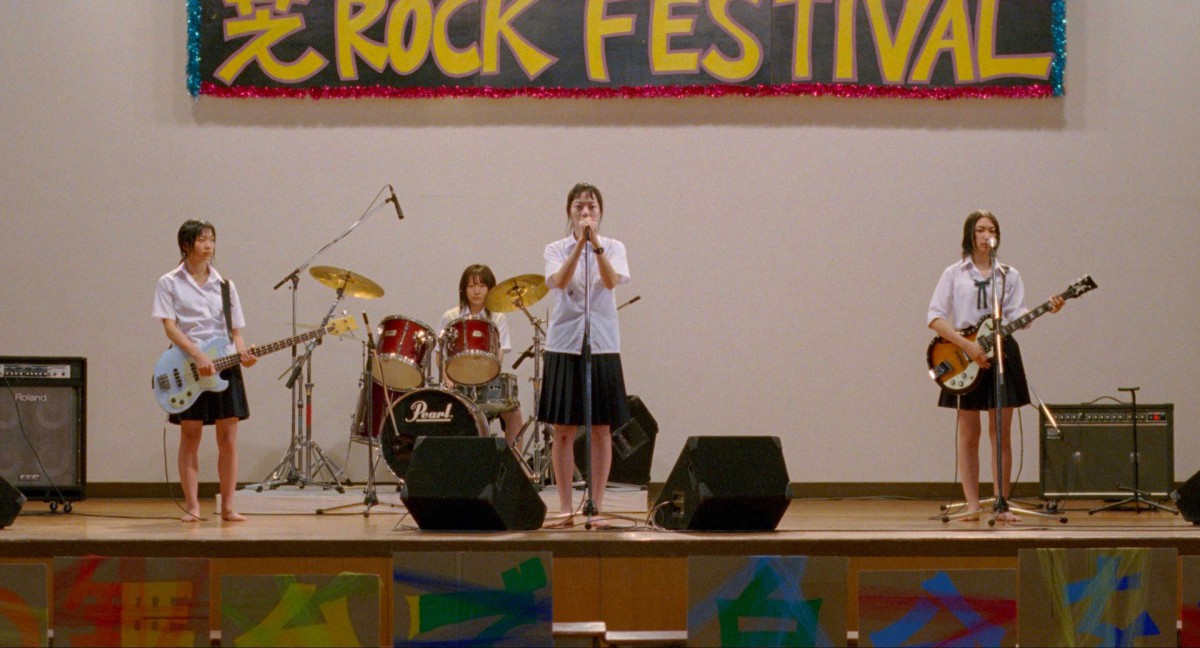
For Kei, Kyoko, and Nozomi, their dream of playing the final high school concert together is dashed when their lead vocalist quits the band. Desperate, they recruit the very first person they see: Korean exchange student Son, played by Doona Bae (THE HOST, BROKER), whose comprehension of Japanese is limited at best. It’s a race against time as the group struggles to learn three songs in three days for the festival’s rock concert.
Linda Linda Linda - Phoenix Cinema, East Finchley
Saturday 18/04/2026 17:00pm
Linda Linda Linda - Ultimate Picture Palace, Oxford
Wednesday 06/05/2026 20:30pm
LINDA LINDA LINDA is an effervescent, tenderhearted snapshot of youth about the unparalleled joy of jamming out with your friends. The soundtrack fuses bangers from iconic Japanese bands The Blue Hearts and Base Ball Bear with original music composed by James Iha of the Smashing Pumpkins. The beloved classic from Nobuhiro Yamashita (GHOST CAT ANZU) is acknowledged by many as one of the greatest Japanese films of the 21st century. In celebration of its 20th anniversary, the utterly charming and timeless classic returns with an all-new 4K restoration.
—
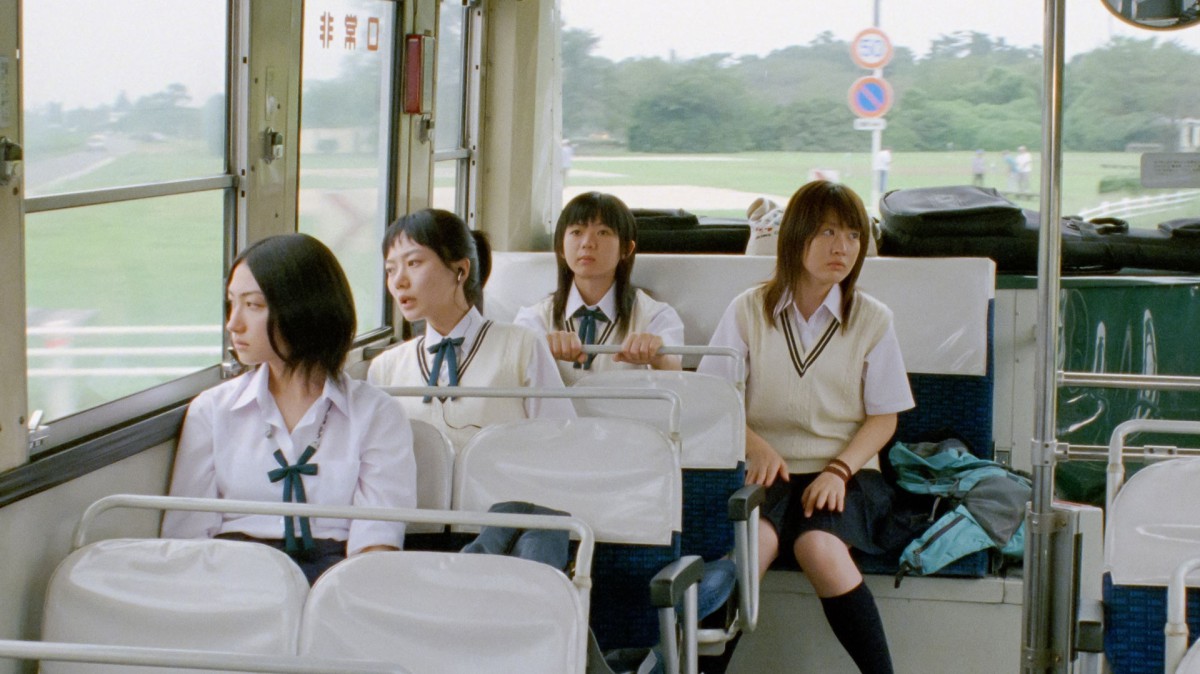
Japanese cinema is full of surprises. For a culture that seems on the surface to adhere diligently to generic convention, individual film makers seem to delight in defying expectations or providing leftfield perspectives on everyday life. Nobuhiro Yamashita’s 2005 high school drama/comedy Linda Linda Linda is one such example. It is in one sense exactly what it says it is – a simple story about four girls, Kei, Kyoko, Nozomi and Son, trying to learn a handful of pop punk songs for their graduation festival. However, within a few scenes it begins to reveal itself as something else: a love letter to the pop punk ethos perhaps, wrapped in a dream-like nostalgia mood piece; a meditation on the condition of being young and the inevitable passage of time. It’s funny too, in just the ways you would hope a teen comedy to be. The gallery of unsuitable boyfriends and crushes got the most laughs out of me, and there’s real empathy and film making skill on display in achieving an unobjectified teenage female perspective throughout the story.
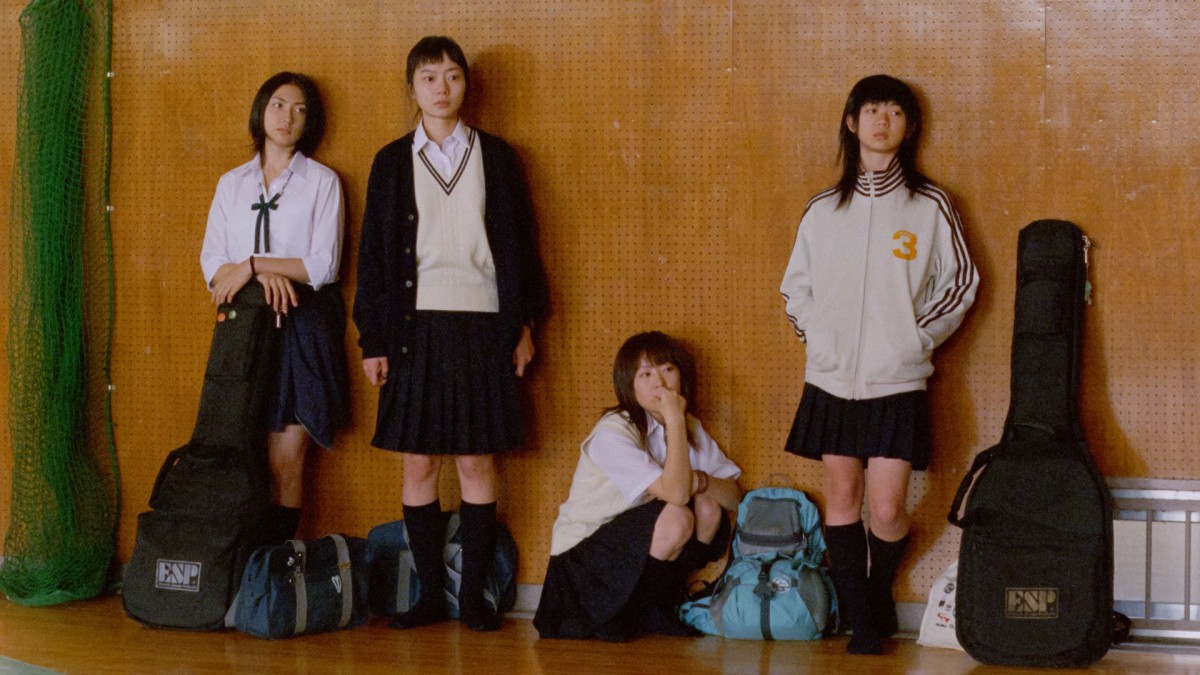
The musical lynchpin of the film is the song Linda Linda by The Blue Hearts, a famous 80s Japanese pop punk band. While largely unknown in the west, this is not an obscure choice – the Blue Hearts figure as the equivalent to The Ramones in the USA, or The Clash in Britain; edgy and controversial in their day, but now a part of pop cultural heritage. While their music recalls an older rebellious era, even within the 2004 setting of the film, it’s the do-it-yourself aesthetic of the whole production that really imbues the film with punk spirit. Every room in Shiba High School is packed with kids making, building, cooking, stitching, singing as they prepare for the festival. It’s a scruffy, happy place with little role for teachers and parents, who are either nowhere to be seen or watch benignly from the fringes. As the girls come together and learn their parts something new is made from old cassette tape recordings and nervous energy. The music has no real purpose other than the sweet, irresistible anarchy of creation. ‘What’s the point?’ asks Kei’s frenemy Rinko. ‘There is no point’ she snaps back, defiantly, reminding all that rock n roll serves no master.
Yet while the plotting and characterisation might recall a Linklater or Shinji Somai film, there’s a melancholy to proceedings. From the opening monologue, part of a home made film within a film, we understand that something is ending, that the school kids are about to leave all this creativity behind to become something else. Kei in particular seems resistant to this fate. Her determination to make a creative statement becomes an act of defiance, against the passage of time perhaps, or the path in front of her. The school and the girls’ homes are shabby and crowded, but are filmed beautifully in soft dreamy light, with small material details and architectural features presented as matters of fact and of everyday beauty. The sense is that the girls – all kids in fact – are meant to move on from this, to something better, but at the same time, that the creative clutter is the essence of life at that stage.
It’s a gem, in short, and we were fortunate enough that Yamashita san agreed to an interview with MadeGood to mark the release of the 20 year anniversary remaster, soon to be screened by yours truly at Japanese Film Club. The interview has been edited for length and clarity.
Linda Linda Linda was not your first film, isn’t that right?
The first thing we made was a graduation project, or a practical training project at university. The first three films were really indie, we made them ourselves, but after that I received proposals, and made films to the specifications that I received.
It was already a project that the producer had decided from the beginning, that high school girls would form a Blue Hearts cover band. Because of that, to be honest, at first I really didn’t know how I would make the film. Initially it was meant to be a battle of the bands, but we stopped talking about fighting musically and winning contests and instead decided to make it something closer to us. So it became just a performance at the school festival, and it felt like the characters gradually became more like ourselves.
I read an interview with you once, and you said the film is partly based on your own experiences making a film in high school?
Yes, the story of the film is somewhat influenced by my own experiences. When I was in high school, I made a film with a friend and screened it at school, but at that time I still didn’t know how to make a film at all. Before the school festival screening, we stayed up all night editing every day without sleeping, and when we went to school sleep-deprived.
At the beginning, a character appears who is making a film, and in the film, there are young people who are filming a documentary about the school festival, so that’s kind of our image at the time.
Are you a fan of the Blue Hearts?
Actually, I wasn’t much of a fan. But everyone in my generation knew the band, and I have an older brother who is four years older than me. His generation was really into the Blue Hearts, they were famous back then, and they were played a lot on TV commercials and used as the theme song for a well known TV drama, so I knew of them, but I’d never actually listened to them properly.
Linda Linda was a really famous song. Everyone knew it, so I definitely wanted to use it. But the other songs were probably decided after discussing them with the producer and various other people.
The Blue Hearts have the reputation for being a punk band, which gives you the image of shaved heads and a certain type of fashion. To mark the film’s 20th anniversary, I’ve been buying The Blue Hearts albums and they don’t sound punk at all. There are some punk songs that make you wonder if they’re punk, but they have a really unique, original feel to them.
This film has the feel of a film 10-15 years older than it is, it reminds me of a Somai Shinji film. Did you take your influences from older films?
Yeah, that’s true. I really love Somai-san myself, and I’ve been influenced by him. In particular, for the rainy scene at the end, I used Somai-san’s Typhoon Club ending scene as inspiration, so I think that the movies of the 80s and 90s are definitely an influence. On top of that, this was my first time using 35mm film which was amazing. I felt like I could really make a real movie for the first time.
I guess a lot of the things that influenced me ended up in the film, and the same goes for music. Of course there was the Blue Hearts, but in the midst of all the different things I did, for some reason I didn’t choose any songs from the 2000s at all, and only chose older songs.
Did you make any more films on 35mm after Linda Linda Linda?
I think that was about the time when the industry transitioned to digital. When we were making movies on film, the atmosphere among the film crew was more serious, and everyone was stressed about getting the shot right. That sort of feeling was really there, but with the shift to digital, that feeling has disappeared a bit, and I think it’s good that the pressure has disappeared.
But personally, I would really like to make at least one more film on 35mm before I die. I think it would be great to shoot a film with that same tension.
What feelings did you have knowing that Linda Linda Linda was going to be remastered and re-released?
First of all, I was quite surprised that 20 years had passed, and it felt like it had gone by so quickly. When I watched the film for the first time in a while, even though I directed it, it doesn’t feel like me. I feel like if I were to make it today, I would probably do it in a completely different way. I really feel a huge distance from the film, a sense of time and distance.
Is that good or bad?
I’m glad I made the film. When I made it I was constantly wondering if this was good enough, but honestly I’m moved by the images I created. I think I can view it objectively because 20 years have passed. The film is about a Japanese band (the Blue Hearts) and Japanese high school, so it never occurred to me that there would be interest outside of Japan. It’s strange to me that the film will be screened in the UK, I’ve only been there once before, but I’m really happy about it.